
Finding the right storage facility in New Zealand is not as simple as picking the closest one and hoping for the best. Whether you are storing furniture during a move, clearing out space for a renovation, or keeping business stock somewhere safe and accessible, the facility you choose matters more than most people realise.
At Storage Depot, we have been helping Kiwi households and businesses work through their storage needs for years, and we know that the wrong choice can cost you more than just money. It can cost you peace of mind. So, if you are weighing up your options for self-storage in NZ, here is what we genuinely think you should be looking at before you commit to anything.
What Security Features Should You Actually Look For?
It sounds obvious, but a surprising number of people look at price first and security second. The reality is that a cheap unit that fails to keep your belongings safe is not a good deal by any measure. When you are evaluating any self-storage facility, the first and most important question to ask is what security measures they have in place and, crucially, whether those measures are active or passive.
Passive security refers to physical deterrents such as perimeter fencing, solid construction, and padlock-compatible locks. Active security, on the other hand, covers CCTV cameras, motion-triggered lighting, and properly alarmed storage units. Ideally, you want a facility that has both working together. Individually alarmed units offer a meaningful layer of protection because they are designed to respond to a threat, rather than simply making unauthorised entry more difficult. Look for facilities where each unit carries its own alarm system, not just a facility-wide perimeter alarm. A perimeter alarm indicates that someone has entered the grounds. An alarm on your specific unit tells you that someone is inside your space, which is a very different and far more useful piece of information.
Gated access with coded or keycard entry is another standard you should reasonably expect from any reputable provider. If a storage site relies primarily on staff presence during business hours as its main form of security, or has an entry gate that is not monitored, that is worth noting before you sign up.
At Storage Depot, our self-storage units in Auckland are fitted with lockboxes as standard and are set within fenced, monitored facilities. We take the view that security should be built into the foundation of how a facility operates, not treated as a premium extra.
Climate Controlled Storage: When Do You Actually Need It?
This is one of the areas where people tend to feel most uncertain, and that is completely understandable. Truth is, not everything you own needs to sit in a temperature-regulated space, but there are items where the environment you store them in really does make a difference to what you get back. Think about things like electronics, solid timber furniture, artwork, musical instruments, wine, paperwork, or even clothing stored over a long stretch of time. All of these can take a hit when temperatures swing or moisture creeps in. New Zealand’s climate varies considerably from region to region, and even in a relatively mild city like Auckland, a unit that does not breathe properly can turn warm and damp through summer in a way that quietly does real damage over time.
Climate-controlled storage works by maintaining a stable internal environment, one that limits moisture build-up, prevents mould from taking hold, and stops organic materials from warping or deteriorating over time. If you are storing items that you expect to retrieve in the same condition you left them, particularly over a longer period, it is well worth looking for a facility that offers temperature-managed units as part of its range.
That said, not every storage situation calls for it. If you are keeping general household items like plastic storage boxes, garden tools, or metal equipment for a short period, a well-constructed, dry unit may be entirely sufficient. The key is being realistic about what you are storing, how long it will be there, and whether that combination puts your belongings at any real risk.
Unit Size and Rental Flexibility: Getting the Balance Right
One of the most frequent mistakes people make when renting storage is misjudging the size they actually need. Some end up cramming belongings into a unit that is too small and struggle every time they need to find something, while others rent a space that is far too large and end up paying for empty air month after month. A good storage provider will take the time to walk you through what size genuinely suits your situation, rather than steering you towards the most expensive option on the list.
It helps to think honestly about how often you are going to be going in and out of that unit. Someone who needs to pull things out on a regular basis will find a cramped space genuinely frustrating to work with, so room to actually move around matters as much as total capacity. On the other hand, if you are putting things away for an extended period and do not plan on visiting much, you can afford to pack more tightly, and a smaller unit might cover everything you need at a friendlier price point.
Rental terms are another part of the decision that does not always get the attention it deserves. Storage needs to shift, sometimes quickly, and being stuck in a contract that does not allow for that can become a headache. Whether you are a household managing a move or a business dealing with seasonal stock overflow, having the option to adjust your arrangement as things change is worth looking for when you are comparing providers. Our North Shore self-storage and Manukau and Wiri locations both operate with flexible rental terms, so whether you need storage for a few weeks during a transition or a longer arrangement for business stock, we can work around your timeline.
Access Hours and Location: The Practical Details That Are Easy to Overlook
You could find what looks like the most secure, well-priced storage facility in New Zealand, and it could still be completely impractical if the access hours do not line up with how you actually live. This is one of those things that tends to get overlooked during the initial search, and then becomes a regular source of frustration once you are locked in.
Take a moment to think about when you are realistically going to need access to your unit. If you work standard business hours and occasionally need to drop things off on a weekend or pick something up early in the morning, the facility’s access window needs to accommodate that. Some providers offer round-the-clock access, others operate within set hours, and some fall somewhere in between with extended weekday windows. None of these is inherently better than the others; what matters is that the hours align with your routine.
Location is equally worth thinking through. A storage unit that requires a 45-minute drive every time you need to retrieve something is not a convenient solution, even if it ticks every other box. Wherever possible, look for a facility that sits within a reasonable distance of your home or workplace so that access remains effortless rather than something you need to schedule in advance.
We have storage locations across New Zealand, spanning Auckland, Hamilton, Tauranga, Christchurch, and Wellington, so the chances are good that we have a depot within comfortable reach of where you are based.
The Condition and Build Quality of the Units
This is something that is genuinely worth seeing in person when you can, because a facility that looks polished in photographs does not always hold up to a closer look. When you visit a site, pay attention to the practical details: clean and level flooring, no visible signs of moisture or water ingress, no rust or warping around the door frames, and locking mechanisms that function smoothly. These things indicate how well the facility is maintained and give you a reliable sense of what your experience will actually be like as a customer.
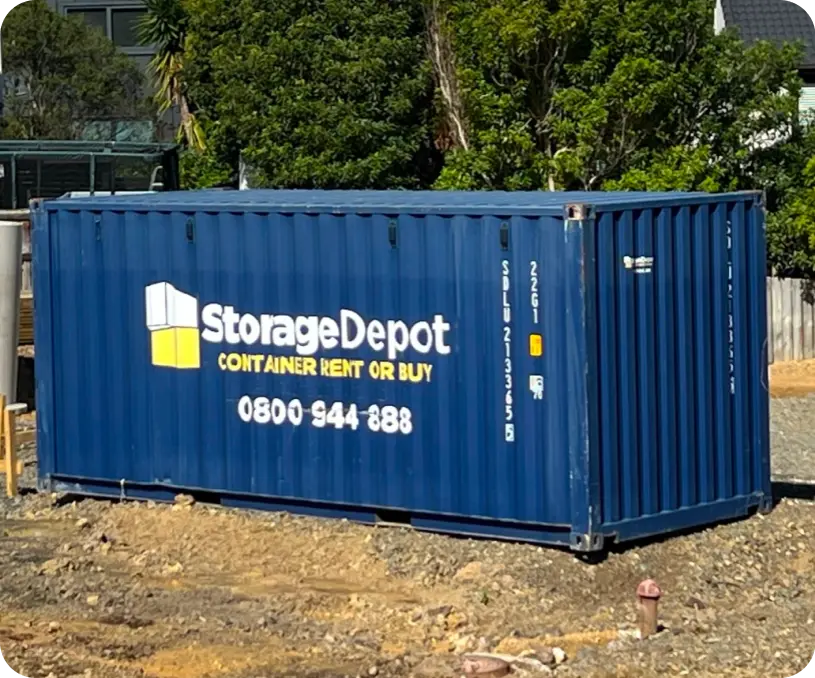
For container-based storage, the standard of construction is particularly important. At Storage Depot, our units are built to be wind and watertight, rodent-proof, and fire-resistant, with solid hardwood flooring throughout. These are not incidental features; they are what stands between your belongings remaining in good condition and returning to find unexpected damage after a few months of storage.
Questions Worth Raising Before You Sign Anything
Before you commit to a storage provider, a handful of well-chosen questions can reveal a great deal about how the business actually runs. It is worth asking what happens if you need to access your unit outside of standard hours, whether the facility has experienced any security incidents and how those were addressed, and what their position is on contents insurance, because some providers include cover as part of the arrangement, while others require tenants to arrange their own. It is also sensible to ask what the process looks like if your needs change and you want to move to a larger or smaller unit partway through your rental.
A provider that answers these questions with clear, direct answers is usually one that has confidence in its own operations. If the responses feel vague or evasive, that is a useful signal in itself.
Making the Right Call for Your Storage Needs
Getting this decision right really comes down to knowing what you need and then checking whether a facility can actually deliver on it. A well-priced unit means very little if the security is patchy, the access hours do not suit your schedule, or the build quality leaves something to be desired. Go through the things that matter to you, whether that is alarmed storage, temperature-managed units, a location near your home, or the freedom to adjust your rental down the track, and hold any provider you are considering up against that list before you commit.
At Storage Depot, we have set things up to be straightforward from the start. Our sites are secure, well-maintained, and easy to get in and out of, and if you are not sure what you need, our team is happy to talk it through with you until things are clear. We would rather you leave with the right unit than the wrong one.
Get in touch with our team today, and we will point you in the right direction.