If you’re short on time, here’s the gist. A 10ft container suits trade contractors and small operators needing secure storage without hogging the whole yard. A 20ft container is the industry standard, balancing capacity and footprint for construction, retail and manufacturing. A 40ft container is built for high-volume commercial and export-related storage, ideal for distribution centres and large-scale construction. The right pick comes down to how much you’re storing, how much room your site has to accommodate the container, and whether that need is temporary or permanent.
At Storage Depot, we talk to construction companies, material yards, manufacturers, retailers, logistics operators and agricultural businesses every week, and they all land on the same question: which container size actually suits the job? Get it right, and you free up site space, protect your stock and keep costs sensible. Get it wrong, and you’re either paying for a room you don’t use or running out of space halfway through a project. That’s why we’ve put together this guide, walking through the three most requested shipping container sizes NZ businesses rely on: the 10ft, the 20ft and the 40ft.
Why Choosing the Right Container Size Matters for Businesses
Picking the correct size isn’t just about fitting your gear in. It shapes how efficiently your site runs day to day. A container that’s too small forces you to double-handle stock or store materials out in the open, exposed to weather and theft. Too large, and you’re eating into space you could use for parking, staging or future expansion.
Transport matters too. Larger units need more room to manoeuvre on delivery, so site access is worth checking against your yard layout, especially if you’re scaling and don’t want to outgrow your storage within a year.
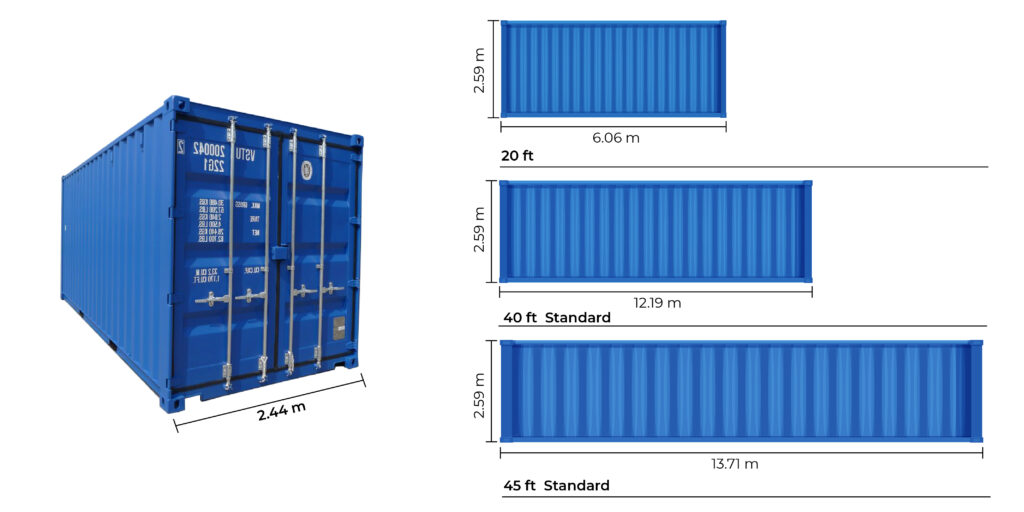
Shipping Container Size Comparison Table
Here’s how the three main sizes stack up side by side.
| Feature | 10ft Container | 20ft Container | 40ft Container |
| External Length | 3.0m | 6.06m | 12.2m |
| Internal Length | 2.95m | 5.9m | 12.03m |
| Width | 2.44m | 2.44m | 2.44m |
| Height | 2.59m | 2.59m | 2.59m |
| Cubic Capacity | Approx. 16m³ | Approx. 33m³ | Approx. 67m³ |
| Suitable Industries | Trades, small sites | Construction, retail, agriculture | Manufacturing, logistics, export |
| Typical Business Use | Tools, consumables | Materials, inventory, equipment | Bulk stock, distribution, long-term storage |
| Recommended Option | Hire or buy | Hire or buy | Hire or buy |
10ft Shipping Container: Best for Small Business Storage
If your yard is tight or you’re moving between job sites, the 10ft container is a good option to consider. We supply plenty to electricians, plumbers, landscapers and other trade contractors who need somewhere lockable for tools and consumables without committing a huge footprint.
The 10ft holds a fair amount of stock, and being easy to shift with a hiab or swing lift makes it practical when your team moves between locations. Have a look at our full 10ft containers for sale range if this sounds like your situation.
20ft Shipping Container: The Industry Standard
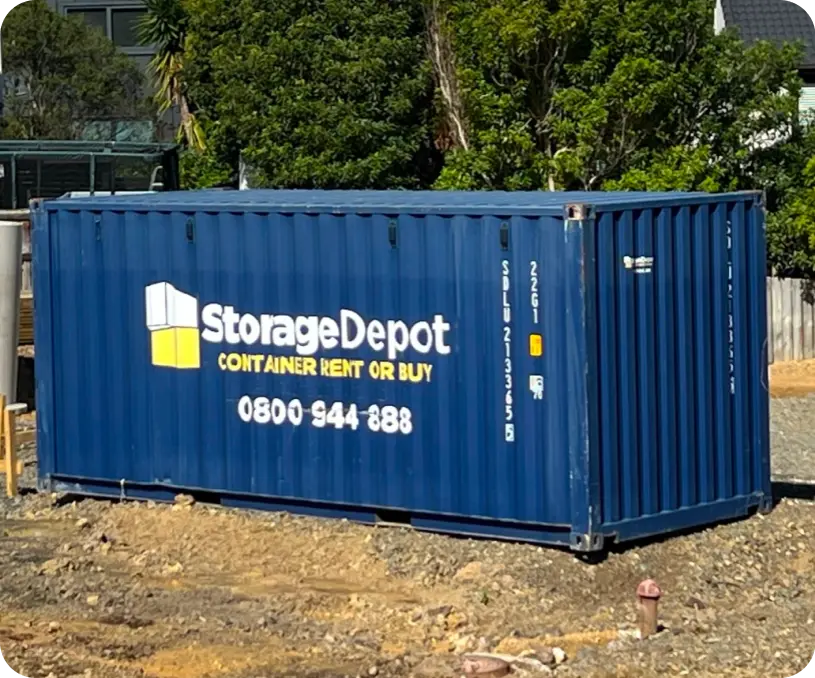
Ask around, and you’ll find the 20ft container is the one businesses reach for first. It hits the sweet spot between capacity and manoeuvrability, which is why construction companies, material suppliers, retailers, manufacturers, farms, schools and government projects all lean on it.
This size handles a genuine volume of stock, building materials, retail inventory, and farm equipment, while still being easy to place, transport and reposition if your project moves. Wondering how big a 20ft container is? Picture a solid number of standard pallets fitting comfortably inside. For most business storage needs, this is where we’d point you first. See the full specs on our 20ft standard container.
40ft Shipping Container: Best for High-Volume Commercial Storage
The 40ft container earns its keep once volume becomes the main challenge. We see it going out most often to distribution centres, manufacturing plants, export operations, mining sites and infrastructure projects, anywhere storage demand has outgrown a 20ft.
Picture a good number of pallets, long lengths of timber, pipe runs, or bulk inventory that would otherwise spill into a second unit. Running one large container instead of splitting stock across two smaller ones tends to be easier to manage overall, and it holds up well on construction sites where materials need shelter from the weather across a long build.
Which Industries Benefit from Each Container Size?
The right size tends to follow the industry and required space. Construction teams generally split between 20ft for on-site materials and tools, and 40ft when a build calls for bulk supplies. Material yards lean towards 40ft or 20ft given how much stock moves through daily. In agriculture, a 20ft covers general equipment while a 40ft handles bulk feed or produce. Retailers mostly get by with a 20ft for seasonal and overflow stock, manufacturers tend to need the extra room a 40ft provides, and logistics operators often run both sizes side by side depending on route volume.
How Much Can Each Container Hold?
Rather than thinking in household terms, it helps to picture operational capacity. A 10ft holds tool storage, shelving and boxed consumables. A 20ft manages several pallets of building materials, pipe lengths, timber stacks or a decent run of retail inventory. A 40ft takes this further, fitting bulk machinery parts, large shelving systems, archive boxes by the hundred.
Key Questions Before Choosing a Container
Before you commit, run through these:
- How much stock or equipment do you need to store now, and in six months?
- Will forklifts need direct access?
- Is the container staying put permanently, or moving between sites?
- Are your storage needs likely to grow as the business does?
- Would you rather hire short term or buy for the long haul?
Hire vs Buy
Hire suits project-based work, seasonal inventory spikes, and temporary sites where you don’t need the container once the job wraps up. It’s also a handy option for households mid-move or renovation, giving you somewhere secure to store belongings until things settle. For a closer look at how businesses put containers to work, our piece on shipping container hire use cases covers plenty of real-world scenarios.
Buy makes more sense for permanent storage, fixed worksites and warehousing, particularly if you’re after long-term savings over an ongoing rental.
Why Businesses Choose Storage Depot
We deliver containers nationwide, with hire and sale options across new and used stock. A single 10ft unit for a small site or a full fleet of 40ft containers for a distribution hub, either way our team sources the right size and gets it to you fast, backed by straightforward site delivery support.
FAQs
Which shipping container size is most popular for construction sites?
Most construction sites land on a 20ft. It offers enough capacity without the placement headaches that come with a larger unit.
How many pallets fit inside a 20ft container?
Around 11 standard pallets, though the exact number shifts depending on how tightly they’re stacked.
Can I hire a container before buying one?
Absolutely. Many clients hire first to confirm the size suits their operation before committing to a purchase.
How much site access is needed for delivery?
This depends on size and placement. Our team talks you through access requirements, including hiab and swing lift options, before delivery day.
Which industries commonly use 10ft containers?
Trade contractors, landscapers and small operators favour the 10ft size for its compact footprint and portability.
Getting your shipping container dimensions right from the outset saves time, money and a fair bit of hassle down the track. If you’re still weighing up which container size is right for your operation, get in touch with our team, and we’ll help you find the fit that works.